iOS 17 · iPhone & iPad
Atelier Watch.Four watches, drawn in code, on your Home Screen and your nightstand.
The watch dial is drawn in code rather than photographed, so each of the four collections is a different watch and not a different picture of one. It also stays sharp at every widget size, down to the smallest one on the Lock Screen.
 The dress collection is free in full · Atelier Pro is a one-time $9.99
How this page is arranged
A watch is specified in an order
Model, then case, then dial, then complications, then the engraving — that is the order a maker takes a commission in, and it is the order you build a watch in here. This page follows the same five stations, so none of it will be new the first time you open it.
The Model
Four collectionsEach collection is a different shape of watch rather than a different colour. The bezel and the hands change, not only the palette, which is why each one is drawn from scratch.
-
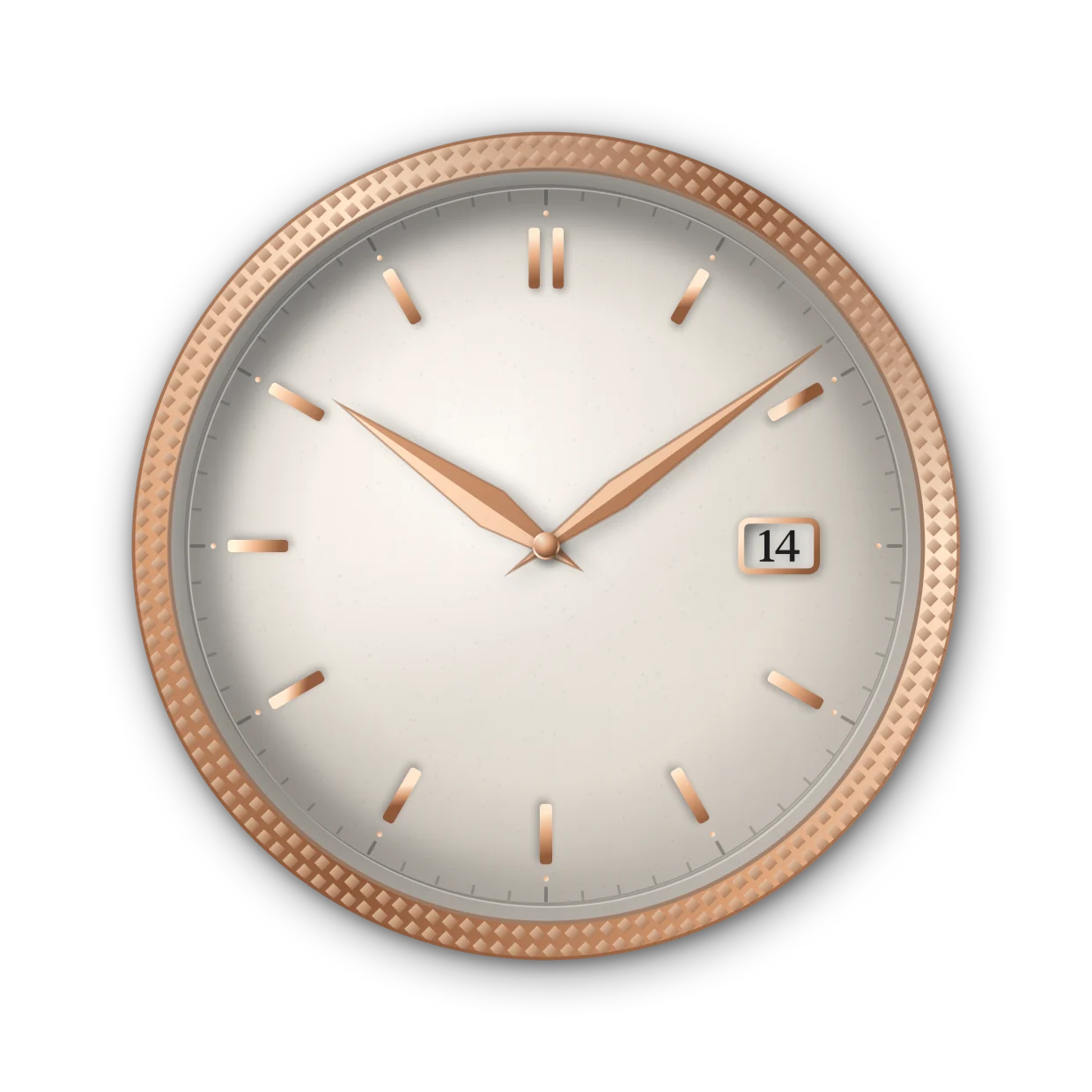
Dress Free
Clous de Paris bezel, applied batons doubled at twelve, dauphine hands. All nine finishes, both dial widgets, every size.
-
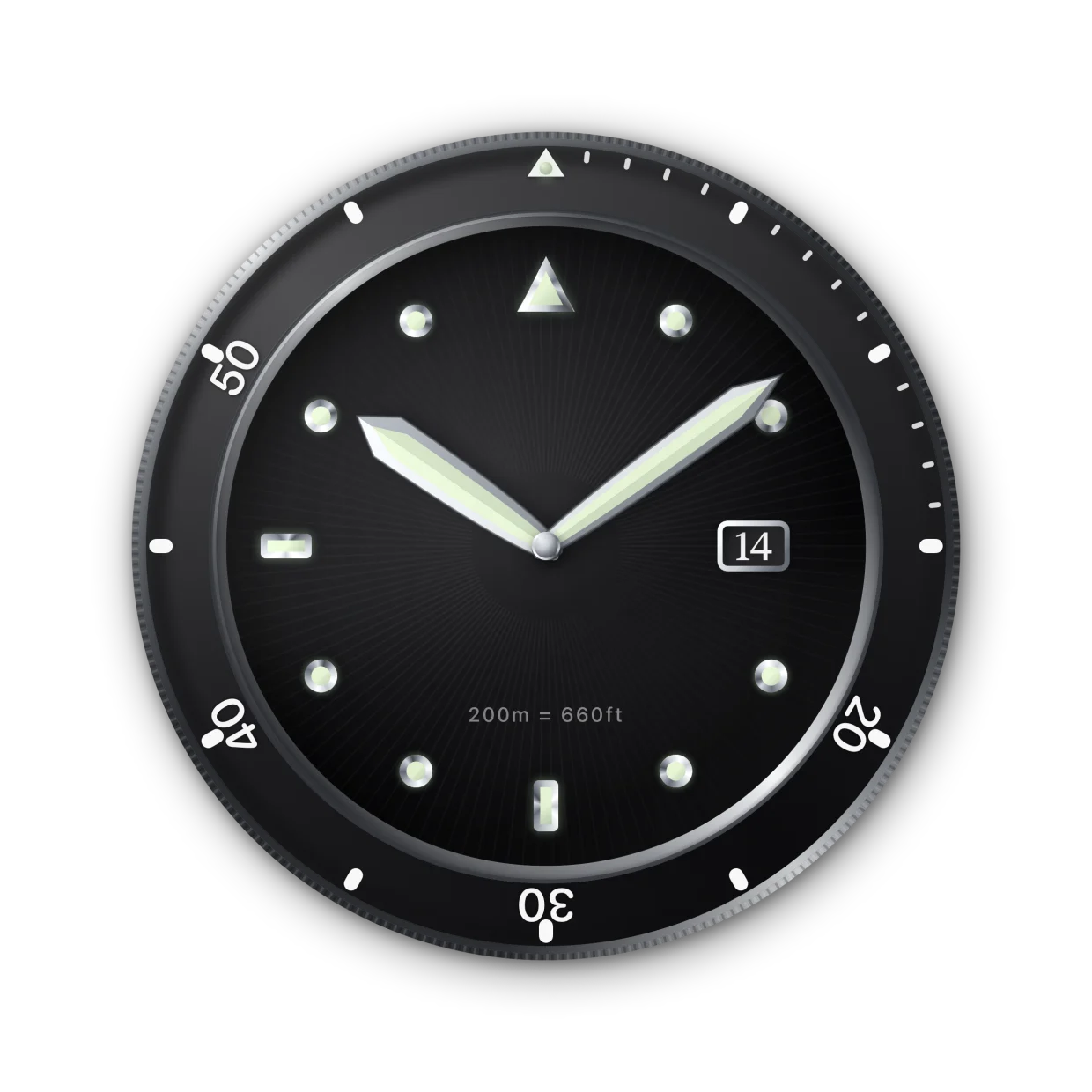
Diver Pro
A rotating 60-minute bezel graduated minute by minute through the first quarter-hour, a luminous pip at zero, sword hands.
-
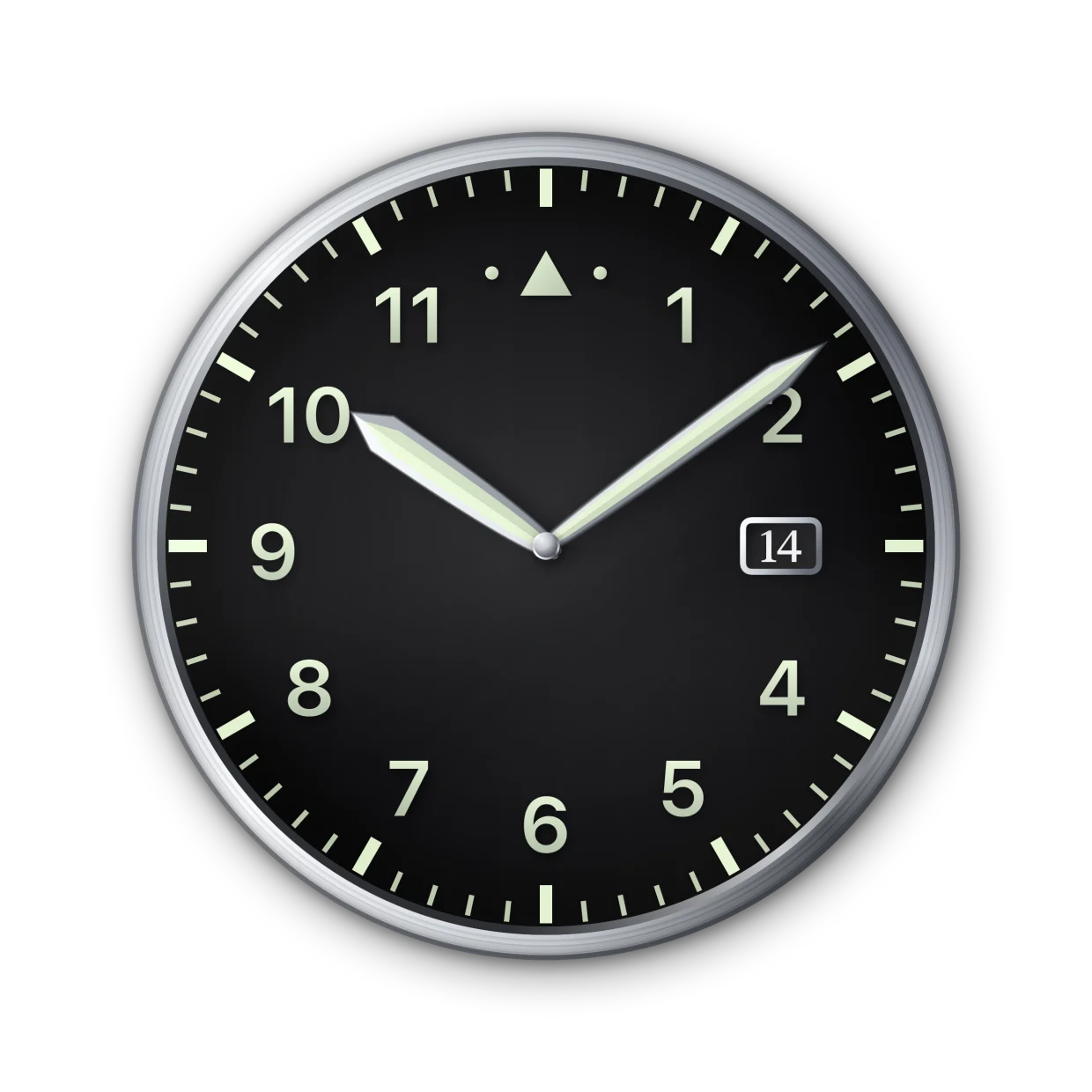
Pilot Pro
A thin bezel and a matte dial, large numerals, and the triangle with two dots at twelve that lets you find the top in the dark.
-
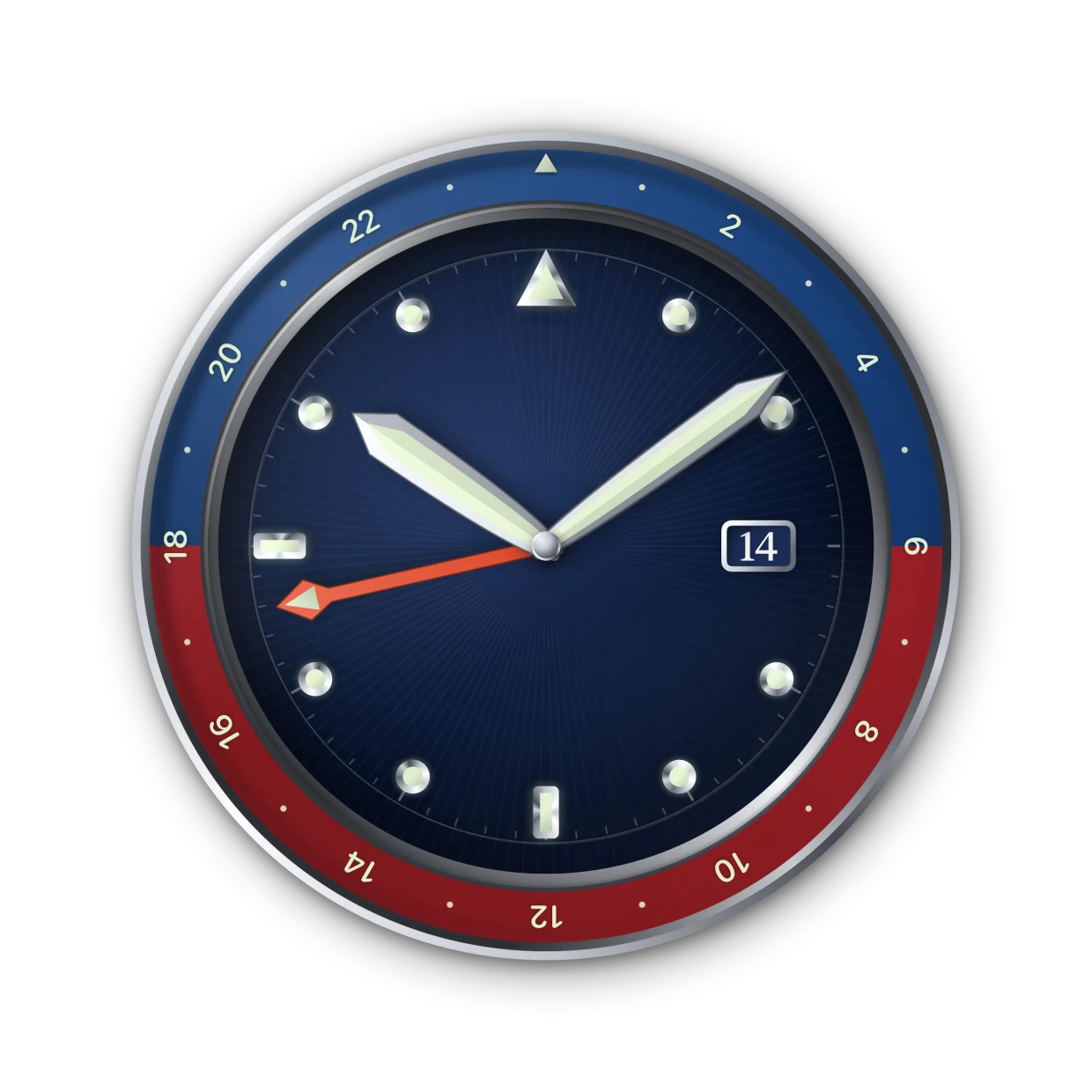
GMT Pro
A fixed day/night bezel and a fourth hand reading a second zone on the 24-hour scale. Pick the city; the hand follows it.
There is no seconds hand, and no chronograph. A widget's timeline carries one entry per minute, so a seconds hand would sit visibly frozen — and a stopped hand does not read as a style, it reads as broken. A chronograph is built around sub-dials that a running seconds hand drives; without it they are three dead circles. So every collection here is one that works honestly with two hands. Removing things to keep the rest true has been most of this project.
The Case
Measured, not guessedEvery part was in the right place, and the dials still looked like drawings rather than watches. The fault was in the shading: each ring had been shaded on its own, so no two of them were lit from the same direction. The fix was to stop guessing and measure.
-
−135°
one sourceThe light
The bezel was shaded from the top left and the markers from the left, because each looked right that way on its own. Together they made a collage — objects that had never been in the same room. Every gradient now comes from one angle held in a single constant, and this page is lit from it too.
-
23 of 255
peak 177The polished flange
The mirrored ring between the bezel and the dial reads as brilliant, so it had been drawn bright all the way round. On the photographs it is almost entirely dark: on a scale where 255 is white its median is 23, and only one narrow band reaches 177. It is drawn dark now, with a single sharp highlight. What the eye reads as polish is the rate of change from black to white, not the brightness.
-
0.185 r
bezelThe dive bezel
At the width it started with, the 60-minute scale could not sit on it with any dignity, and the ring read as a line rather than as part of the case. It is 0.185 of the radius now, nearly a quarter. The pilot's is 0.078, because on that watch the dial is the whole point.
-
no flank
on purposeWhat is not drawn
A metal wall around the bezel looks like free depth. It was drawn, and then removed. A wall reads as the side of a cylinder seen at an angle, and that contradicts the viewpoint of everything else, which is from directly overhead. The shadow the watch casts does the same job without claiming anything about where you are standing. Depth cues have to agree or they cancel.
How a drawn watch catches light
The whole account, first-hand: what the reference photographs said, and what each measurement changed.
The Dial
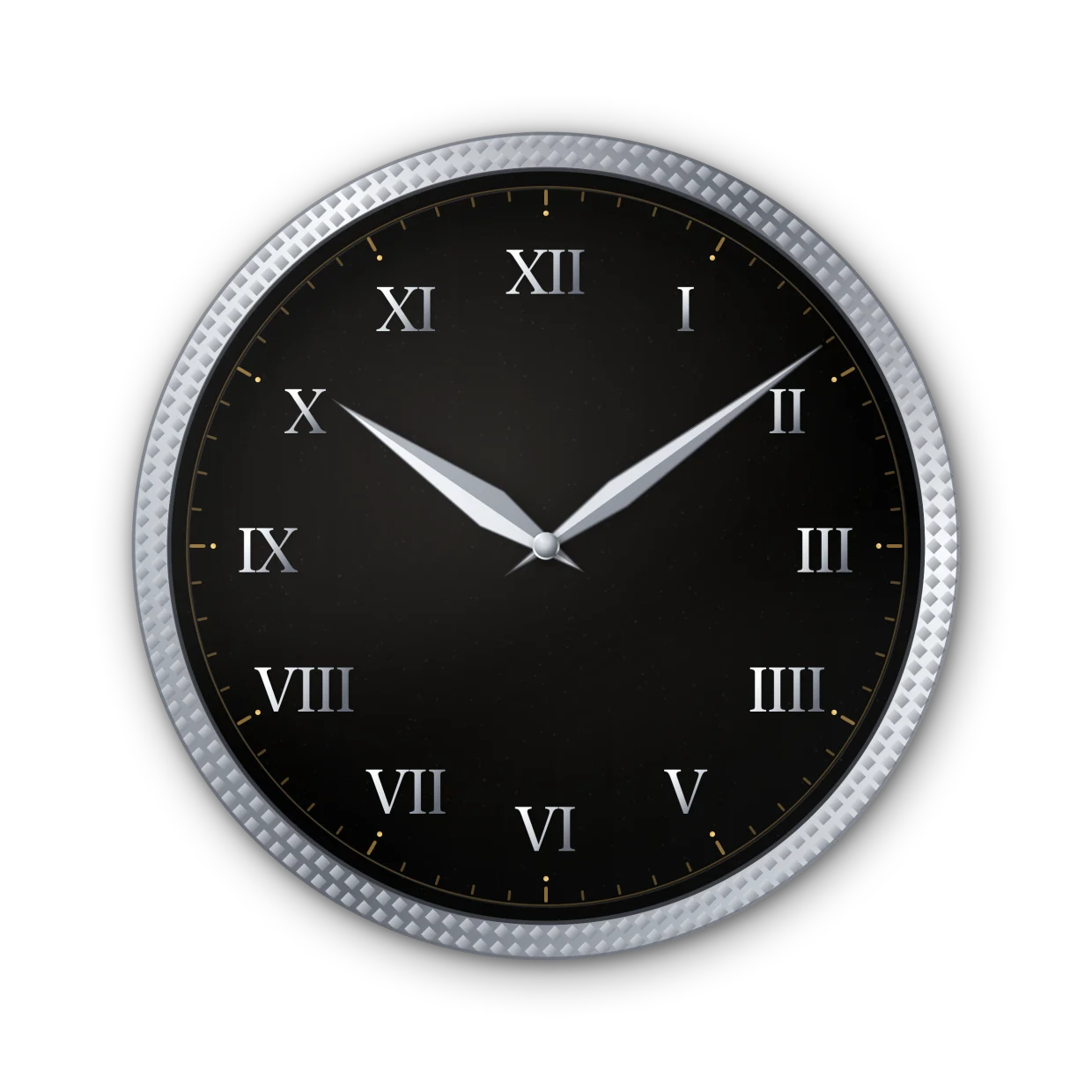
Gilt · Black — nine finishesA dial is a surface with a finish, and a finish decides how light leaves it. That is what has to be drawn: a photograph fixes one angle, and a finish is the thing that changes as the watch turns.
-
IIII
not IVThe four
Watch and clock dials have printed IIII almost without exception for centuries: it balances the VIII opposite it and divides the dial into three even zones. These dials carried IV until it was noticed; the one beside this note is the corrected version. It costs nothing to get right and everything to get wrong, because the people most likely to enjoy this are exactly the people who see it immediately.
-
two lobes
⟂ to sourceThe sunburst
260 fine rays at even intensity produce a symmetrical bright ring, and an even ring is the thing that most gives away a drawn dial. A radially brushed surface does something else: it returns light in two opposing wings, on the axis perpendicular to the source, and falls almost quiet between them. The rays are brightest in those two zones now, and the axis they sit on comes from the same light angle as everything else.
-
domed
not flatThe curvature
A curved dial is not brightest at its centre; it is brightest in the zone facing the light. So the centre of the radial gradient sits toward the light rather than in the middle, which is the whole difference between a surface and a flat disc. The pilot's dial is the deliberate exception — matte and flat, because curvature works against the only thing that dial is for.
-
gilt
gold firstThe printing
Gloss black lacquer with gold printing, from the era when the text was laid down in gold before the black went over it. The minute track is gilt; the numerals are applied metal. They are different materials and catch the light differently, which you can only see because both are lit from the same place.
Complications
And one materialA date window is a complication, and so are the moon phase and the second time zone. Lume is not — it is a material. The workshop keeps that distinction because the people who build watches here already make it.
-
synodic
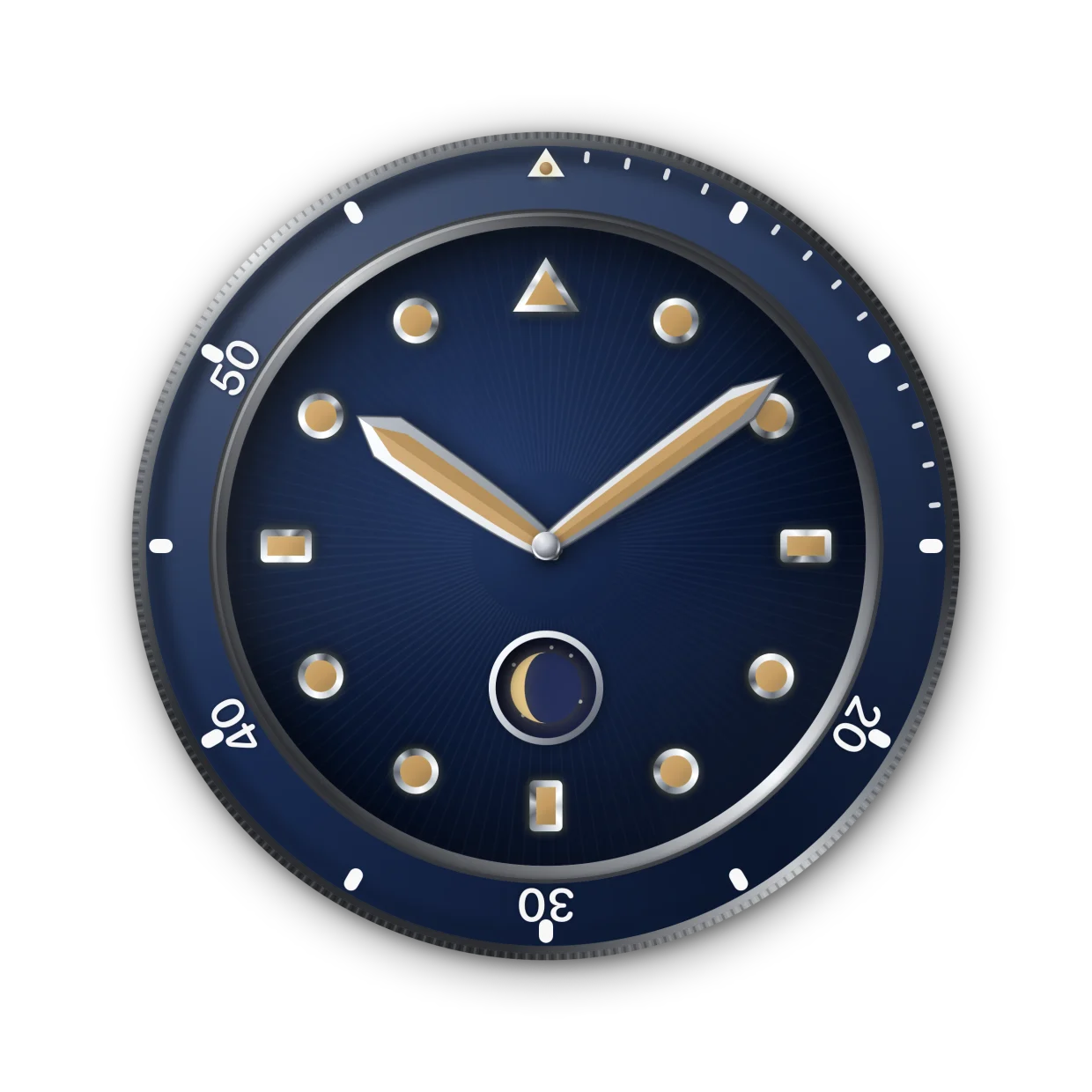
no networkThe moon phase
Computed from the synodic month in arithmetic, at six o'clock where it belongs. It asks for no location and makes no network call. A complication that usually justifies both sits inside an app that collects nothing at all.
-
cream
in daylightThe lume
Luminous material does not glow in daylight. In every reference photograph it is a pale cream ceramic with barely a hint of colour; the saturated green everyone pictures is what it emits in the dark. So it is drawn in its daylight colour here, and the saturated tone appears only in the glow. Five materials, and Aged Radium stays caramel the way aged tritium does.
-
~600 zones
91 citiesThe second zone
The GMT hand reads any IANA zone on the 24-hour scale, and the Dual Time widget puts two dials side by side with each city named beneath it. Each dial runs on its own calendar, so the same instant is drawn in each city's local hour. A badge marks a city already on tomorrow.
-
dim red
StandByThe night
On the nightstand, when the system strips the widget's background and shows it full-width on black, the dial turns a dim red. Red is the colour that interferes least with dark adaptation. It is a setting of the device rather than of the watch, so it covers every Atelier widget in StandBy and leaves the Home Screen alone.
The Engraving
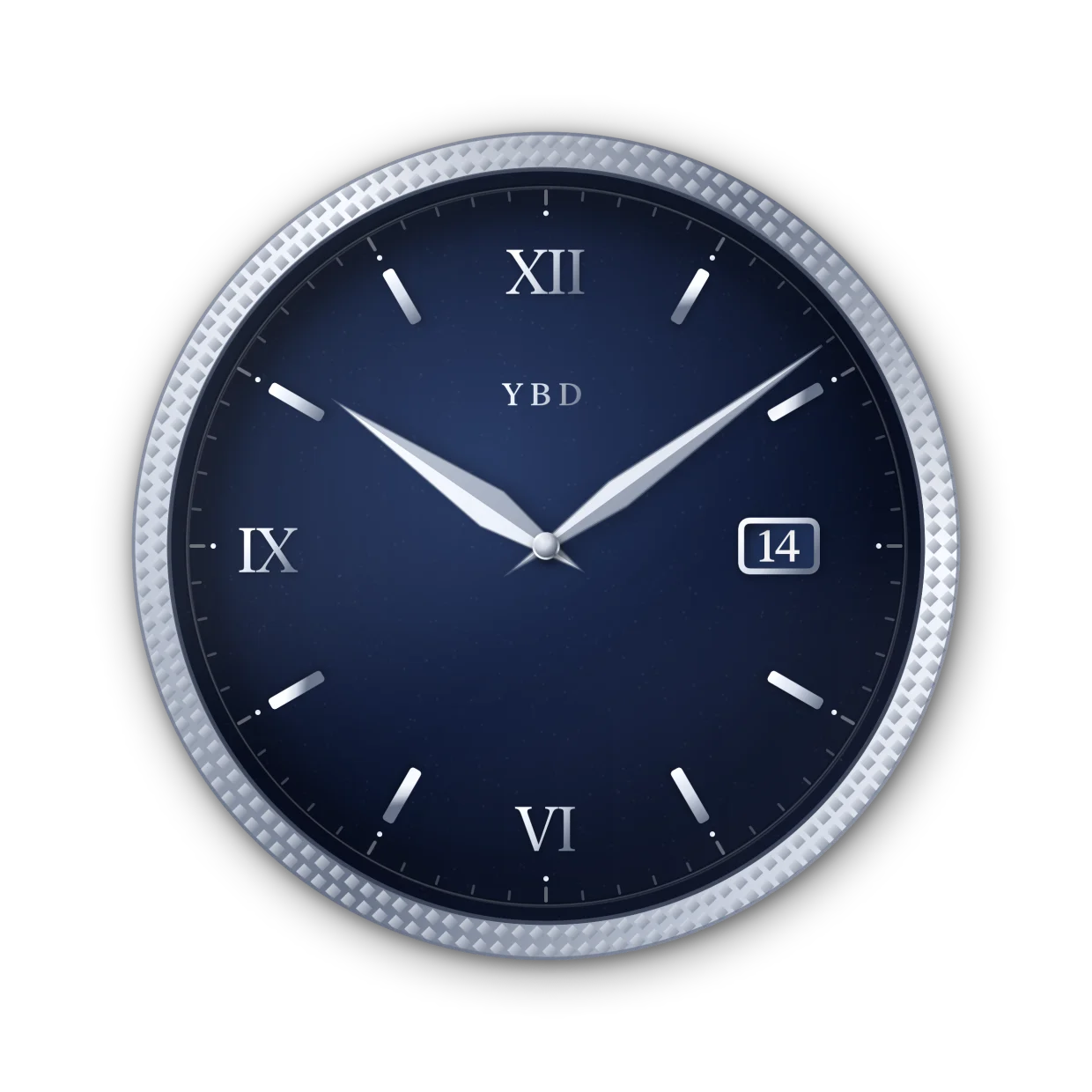
Where a maker signsBelow twelve is where the maker's name goes on a real dial. On yours it holds whatever you put there. That is what makes it your watch rather than one of nine finishes.
-
hands
must reachThe rule about length
The minute hand's tip has to touch the minute track, and the hour hand's has to reach the inner edge of the markers. It is what watchmakers hold to and what enthusiasts complain about most on real watches. All four collections were short. The lengths are now derived from the marker and track geometry rather than chosen by eye, and tests fail the build if a change to the markers quietly breaks them.
-
every size
every modelThe audit
The engraving is drawn at every size any iPhone renders a dial at, swept continuously and compared pixel by pixel against the same dial without it. That test exists because a size threshold once hid the engraving on the most common widget of all, and nothing about the dial looked wrong — one small detail was simply, silently absent.
-
drop it
than fake itOrnament that knows its size
At Large the dive bezel shows its 10/20/30/40/50 numerals and all sixty graduations. Below a threshold they go, because at four points they are a smudge rather than information. The same applies to the depth rating and the moon aperture. A detail rendered illegibly is worse than a detail left out.
Delivery
One purchase, no subscriptionThe watch you build in the app is the watch your widgets wear. Build it once, place a widget, and it follows every change you make afterwards.
-
Free
The dress collection, in full
All nine finishes, both dial widgets, every widget size, the Lock Screen in three shapes, and StandBy. Not a trial and not a watermark — the whole collection.
-
$9.99 once
Atelier Pro
The Diver, Pilot and GMT collections and every collection added later; the complications — moon phase, engraving, the five lume materials and StandBy night mode; and the Dual Time widget. One payment, restorable, no subscription and no advertising.
-
Always
Nothing leaves the phone
No accounts, no analytics, no network access at all. The moon phase is computed rather than fetched, so not even a location is asked for. The app's privacy manifest is empty because there is nothing to declare.
On the App Store
The dress collection downloads free and complete. Atelier Pro is a single $9.99 purchase inside the app, restorable, with no subscription behind it.
Tell the workshop
Which watch to draw next — or a detail on one of these dials that is wrong. Two have already been fixed that way.
The studio
What else comes off this bench
Atelier Watch is one of twenty-four apps from the same developer. The others are utilities — small, single-purpose Mac and iPhone tools — and they are drawn with the same care about a detail nobody was supposed to notice.
The full catalog
Twenty-four apps for Mac, iPhone and the web, on bdtech.app.
Support
Questions, or a detail that looks wrong
Email reaches the developer directly.
support@bdtech.app